Trump's tariffs: the mainstream view

Mainstream media has very little to say about this news given the huge implications
Trump says buying Iranian oil must stop, threatens secondary sanctions on purchasers
May 2, 2025
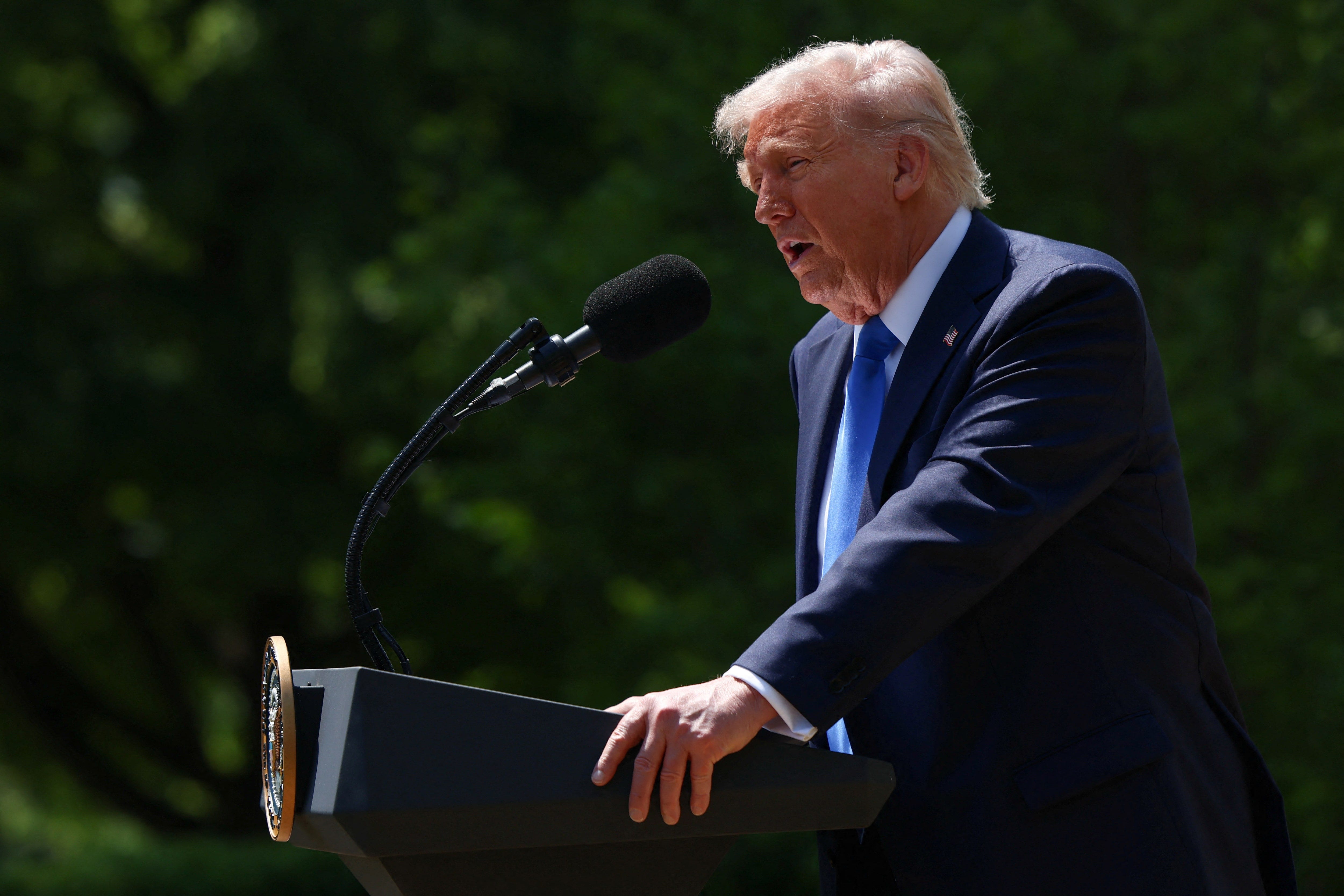
May 1 (Reuters) - U.S. President Donald Trump said all purchases of Iranian oil or petrochemical products must stop and any country or person buying any from the country would be immediately subject to secondary sanctions.
"They will not be allowed to do business with the United States of America in any way, shape, or form," he wrote on Truth Social on Thursday.
Trump's comments follow the postponement of the latest U.S. talks with Iran over its nuclear program, which had been due to take place in Rome on Saturday. A senior Iranian official told Reuters a new date will be set "depending on the U.S. approach."
Advertisement · Scroll to continue
Trump's administration has targeted Tehran with a series of sanctions on entities including a China-based crude oil storage terminal and an independent refiner it has accused of being involved in illicit trade in oil and petrochemicals.
In February Trump restored a "maximum pressure" campaign on Iran which includes efforts to drive its oil exports to zero and help prevent Tehran from developing a nuclear weapon.
Secondary sanctions are those where one country seeks to punish a second country for trading with a third by barring access to its own market, a particularly powerful tool for the United States because of the size of its economy.
Analysts have said that to really crack down on Iran's oil exports the U.S. would have to impose secondary sanctions on entities such as Chinese banks that facilitate the purchases of Iranian oil. China is the largest buyer of Iranian crude.
Trump's Newest Iran Sanctions Another Shot Across China's Bow
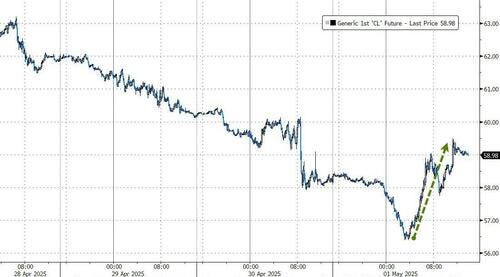
Thursday saw President Trump and the US Treasury unleash a new sanctions pile-on against Iran, with a new rollout of secondary sanctions targeting Iranian oil and petrochemical products, sending crude prices higher on the day...
"They will not be allowed to do business with the United States of America in any way, shape, or form," the President wrote on Truth Social in combination with a Treasury statement. It's as yet unclear precisely how such sanctions will be implemented, with the most extreme or 'nuclear option' being naval intervention against vessels transporting Iranian oil.
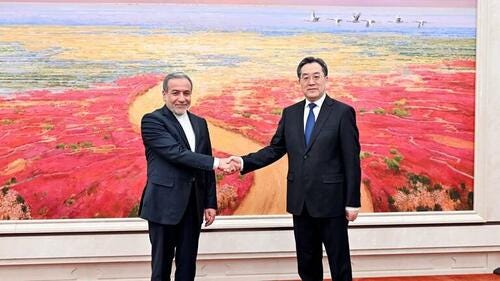
The main warning and teeth behind it centers on the threat that any nation buying oil or petrochemicals from the Islamic Republic will be barred from doing any business with the US.
"Any Country or person who buys ANY AMOUNT of OIL or PETROCHEMICALS from Iran will be subject to, immediately, Secondary Sanctions," Trump stated in the post. Oil had quickly jumped 2% on the mid-afternoon announcement.
Trump is clearly setting out to negotiate from a position of "strength" amid his maximum pressure campaign, aimed at getting Tehran to sign on to a fresh nuclear agreement.
Talks have apparently hit some logistical hurdles, or perhaps Trump's new secondary sanctions have resulted in jitters and renewal of anger and lack of trust from Iranian leadership:
A fourth round of Iran-US talks over Tehran's nuclear program has been postponed.
Iran said the two countries, along with facilitators Oman, had jointly decided to postpone Saturday's meeting in Rome for "logistical and technical reasons". The US said the timing of the talks had not been confirmed in the first place.
Is this an intentional stall?
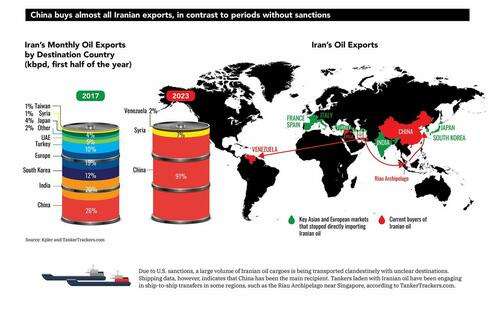
Surely it's also a shot across China's bow, given that it imports over a million barrels per day from Iran, and for years amid Tehran's isolation has been the biggest buyer of Iranian crude.
As for when US-Iran talks might resume, after relatively 'positive' prior recent rounds, Iran's Foreign Minister Seyed Abbas Araghchi emphasized Thursday on X that Tehran's "determination to secure a negotiated solution" had not changed.

He wrote: "In fact, we are more determined than ever to achieve a just and balanced deal: guaranteeing an end to sanctions, and creating confidence that Iran's nuclear program will forever remain peaceful while ensuring that Iranian rights are fully respected."
Here, for what it is worth, is what Grok says.
The situation surrounding U.S.-Iran negotiations, recent sanctions, and their implications for China is complex and fraught with geopolitical tension. Let’s break it down based on available information and critically assess the potential economic and military ramifications.
Context of Negotiations and Sanctions
Recent Negotiations: Indirect talks between the U.S. and Iran, mediated by Oman, began in April 2025 to address Iran’s nuclear program and the possibility of lifting U.S. economic sanctions. These talks were described as “constructive,” with a second round initially planned but postponed for “logistical reasons” as of May 2, 2025.
Secondary Sanctions: On May 1, 2025, President Trump announced that any country or entity purchasing Iranian oil or petrochemicals would face secondary sanctions, effectively cutting them off from U.S. markets. This was part of the “maximum pressure” campaign to curb Iran’s nuclear ambitions and regional influence. These sanctions explicitly target countries like China, which imports nearly 90% of Iran’s crude oil exports (approximately 2.6 million barrels per day in 2023).
China’s Role: China has been Iran’s primary economic lifeline, purchasing discounted oil to bypass Western sanctions. This trade, often conducted through “teapot” refineries and a “shadow fleet” of tankers, has allowed Iran to generate significant revenue despite U.S. restrictions. Beijing’s continued engagement with Iran reflects its strategic interest in securing energy supplies and countering U.S. financial dominance.
Economic Consequences
The imposition of secondary sanctions aimed at China could have significant economic ripple effects, but the severity depends on enforcement and China’s response:
Impact on Iran:
Iran’s economy heavily relies on oil exports, which generated over $50 billion annually in 2022 and 2023, largely due to Chinese purchases. Stricter enforcement of secondary sanctions could throttle these exports, exacerbating Iran’s economic crisis. The Iranian rial has already lost over 90% of its value since 2018, with inflation hovering around 40–50%.
Reduced oil revenue would further strain Iran’s ability to fund domestic programs and regional proxies, potentially fueling internal unrest.
Impact on China:
China’s economy, as the world’s largest crude oil importer, depends on diverse energy sources. Iranian oil, often purchased at a discount, saved China an estimated $10 billion in 2023. Losing access to this supply could increase energy costs, particularly if global oil prices rise due to supply disruptions.
However, China has developed sophisticated mechanisms to evade sanctions, including using non-dollar transactions, Chinese banks, and shell companies. For example, payments for Iranian oil are often denominated in yuan and processed through Chinese financial institutions outside U.S. jurisdiction.
The threat of secondary sanctions could deter some Chinese firms, particularly those with exposure to U.S. markets, but Beijing’s state-owned enterprises and smaller “teapot” refineries are less vulnerable to U.S. pressure. Past behavior suggests China may continue to prioritize energy security over compliance with U.S. sanctions.
Global Economic Implications:
A sharp reduction in Iranian oil exports could tighten global oil supplies, driving up prices. Estimates suggest Iran’s exports could lower world crude prices by 10%, and their removal could cost consumers billions annually.
U.S.-China trade tensions, already strained by Trump’s 145% tariffs on Chinese goods, could escalate further if secondary sanctions target major Chinese firms. This risks disrupting global supply chains and increasing costs for goods reliant on Chinese manufacturing.
Potential for War
The claim that these sanctions could lead to “catastrophic” consequences, including war, requires careful scrutiny:
China’s Likely Response:
China, as a global superpower, is unlikely to tolerate overt economic coercion without pushback. However, its response is more likely to be economic and diplomatic rather than military. Beijing has historically avoided direct confrontation with the U.S., preferring to exploit sanctions loopholes and strengthen alternative financial systems (e.g., yuan-based trade).
Posts on X suggest skepticism about the effectiveness of secondary sanctions, noting that China can continue buying Iranian oil through non-U.S.-aligned channels. This reduces the likelihood of China feeling cornered enough to resort to military action.
China’s broader geopolitical strategy, including its Belt and Road Initiative and energy diversification, prioritizes long-term influence over short-term escalation.
U.S.-Iran Tensions:
The greater risk of conflict lies with Iran. Trump has repeatedly threatened military action, including “bombing the likes of which they have never seen before” if Iran does not agree to a nuclear deal. Iran’s Supreme Leader has rejected negotiations under duress, and its nuclear program is reportedly at “mile 25” of a 26-mile marathon toward weaponization.
Iran’s vulnerabilities—economic fragility, degraded air defenses, and weakened regional proxies—make it cautious about provoking a direct U.S. or Israeli strike. However, miscalculations, such as Iran accelerating its nuclear program or retaliating through proxies, could escalate tensions.
China-U.S. Military Confrontation:
A direct U.S.-China military conflict over Iran is highly improbable. China’s military cooperation with Iran is limited, and Beijing has no formal defense pact with Tehran. Unlike Russia, which supplies Iran with drones and energy deals, China’s support is primarily economic.
The U.S. has not signaled an intent to militarily enforce sanctions against China, focusing instead on financial penalties. China’s nuclear arsenal and economic clout deter direct U.S. aggression, while the U.S.’s global military presence discourages Chinese adventurism.
Critical Assessment
Sanctions Effectiveness: Secondary sanctions have historically had mixed results. While they reduced Iran’s oil exports post-2018, China’s continued purchases demonstrate their limitations. The U.S. lacks the leverage to fully isolate China, given Beijing’s dominance in global trade and its non-reliance on the dollar for Iran transactions.
Economic “Catastrophe”: The economic impact on China is unlikely to be catastrophic. China’s diversified energy imports (from Russia, Saudi Arabia, etc.) and domestic production mitigate the loss of Iranian oil. Iran, however, faces a more dire outlook, with sanctions exacerbating its economic woes.
War Risk: The risk of war is higher between the U.S./Israel and Iran than with China. Iran’s nuclear advancements and Trump’s aggressive rhetoric increase the chances of a limited strike, but a broader regional conflict involving China is unlikely given Beijing’s restraint.
Conclusion
The secondary sanctions targeting countries trading with Iran, particularly China, will strain U.S.-China relations and pressure Iran’s economy significantly. However, China’s ability to circumvent sanctions through non-dollar trade and its strategic caution make a catastrophic economic fallout or direct military conflict unlikely. The more immediate concern is U.S.-Iran escalation, where missteps could lead to airstrikes or regional instability. Both sides appear motivated to avoid war, with Iran seeking sanctions relief and the U.S. aiming to curb nuclear proliferation, but the path to a new deal remains uncertain.
https://x.com/i/grok?conversation=1918406899210567849
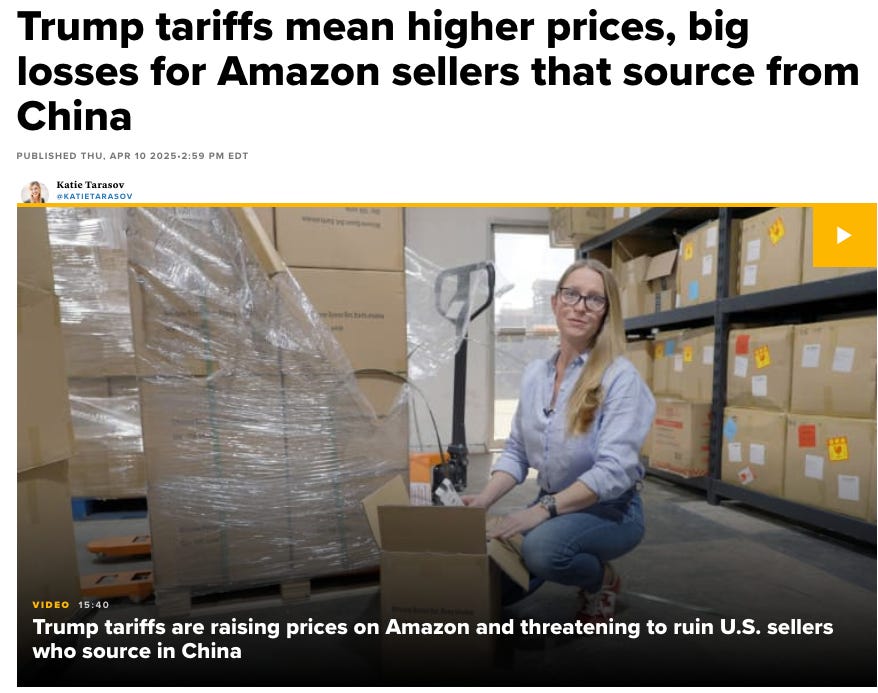
President Donald Trump’s aggressive tariff policy on April 2 didn’t just cause mayhem in the stock market. It sent Amazon sellers into a panic.
Many sellers on Amazon count on China for manufacturing and assembly due to lower costs and established infrastructure – up to 70% of goods on Amazon come from China, according to Wedbush Securities. With nearly all imports from China being taxed a staggering 145% under the latest tariffs, Amazon sellers are having to decide whether to raise prices or absorb the vastly increased cost of importing their goods.
Amazon CEO Andy Jassy on Thursday told CNBC that its vast network of third-party sellers will likely “pass the cost on” to consumers. He added that Amazon has done some “strategic forward inventory buys” and looked to renegotiate terms on some purchase orders to keep prices low.
https://www.cnbc.com/2025/04/10/trump-tariffs-mean-higher-prices-big-losses-for-amazon-sellers.html
Comments from Mike Adams
RETAIL APOCALYPSE INCOMING: If Trump doesn’t reverse his announced trade embargo on China, Amazon dot com will go bankrupt. According to CNBC (https://www.cnbc.com/2025/04/10/trump-tariffs-mean-higher-prices-big-losses-for-amazon-sellers.html), “up to 70% of goods on Amazon come from China, according to Wedbush Securities. With nearly all imports from China being taxed a staggering 145% under the latest tariffs, Amazon sellers are having to decide whether to raise prices or absorb the vastly increased cost of importing their goods.”
But that article was obviously written before Trump’s announcement (yesterday) of a total trade embargo against China, saying that any buyer of Iran’s oil would be prohibited from selling anything to the United States, with no exceptions. (China is the No. 1 buyer of Iranian oil.) In Trump’s own words, “They will not be allowed to do business with the United States of America in any way, shape, or form.”
With a total embargo, Amazon sellers won’t even have the option of raising prices. There will be no China-made products to sell, period.
Amazon, Walmart, Home Depot, Best Buy, Lowe’s, Target and other mainstream retailers are about to face supply chain Armageddon. It’s not clear how long they can stay in business without China factories shipping them things to sell. Auto manufacturers in the U.S. will be forced to shut down in a matter of just a few weeks after this new embargo takes effect, lacking key components from China. And tech giants like Apple are already talking about a near-$1 billion charge for the quarter, just to cover increased tariff costs. That’s assuming they can get the parts at all.
In other words, Trump is going to burn down the U.S. economy in the process of waging an economic war against China. It is delusional, practically a form of mental illness, to think that U.S. factories will just spring up and replace China-made goods overnight. Anyone who believes that is incompetent and wildly uninformed, lacking a connection with reality. You can’t set up instant factories like they were pop-up tents. It would take America something like TWO DECADES to build a domestic infrastructure that even comes close to China’s manufacturing, transportation and raw materials infrastructure, and that’s assuming that 50+ million Americans can’t wait to work in factories and that they have the skills, endurance, health and mobility to even do that. Of course, they don’t. Not at any wage.
Incredibly, Trump’s handling of this tariff trade war is making the Democrats look like geniuses. That’s really something, given that Democrats think men can get pregnant and that mutilating children is “gender affirming care.” Yet somehow, Trump is managing to OUT-CRAZY THE CRAZIES!
The GOP is going to get absolutely slaughtered in the mid-terms if Trump stays on this course. Americans elected Trump to arrest the traitors and GROW the economy. Instead, Trump arrests no one of any significant and commits economic arson across America. This will not go well… and Trump’s support base is flipping on him right now, with a massive wave of blue-collar workers about to find themselves unemployed under Trump. There goes Pennsylvania!
The Trump apologists who don’t see this are wearing blinders and will suffer their own form of T.D.S. when reality smacks them hard.
https://t.me/seemorerocks/86431
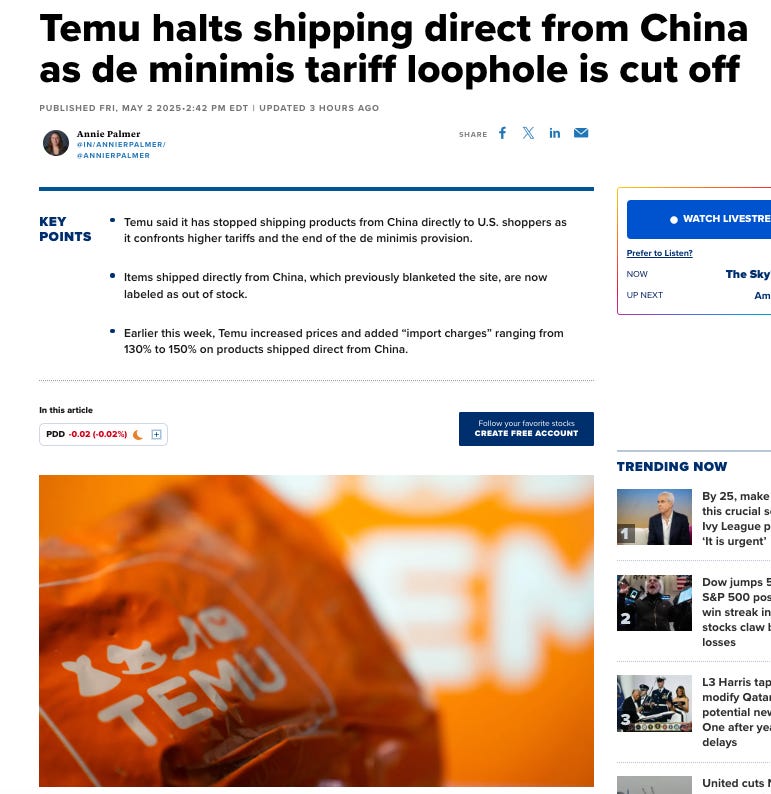
The "out of stock" era has begun. Temu just halted all shipments to the USA. Every product made in China now shows "out of stock." This is just the beginning
Since the Chinses LITERALY owned the Biden family and we keep finding one PRC operative after another on congressional staffs I would say part of the deep state is JUST FINE with China actually. Problem is the amercan oligarchs MUST have war to collapse the economy and repudiate the national debt. Nothing personal goy...eat rocks and die......
Iran and China are NOT friends of ours. IRAN’s LEADER SHOUTS “ DEATH TO AMERICA, the GREAT SATAN” and DEATH TO ISRARL” the LITTLE SATAN! Remember their cult teaches them to DECEIVE THE INFIDEL! That is how the view Americans. Of course, with Biden and Obama, IRAN AND CHINA WERE REWARDED WITH MONEY AND GOLD… while Americans lived through the highest inflation in 50 YEARS! Biden took away the tax cuts that Trump had given us in his first day in office.