Ringing Cedars in Russia

I have been paying quite a lot of attention to Jean Nolan of the Inspired YouTube channel and getting a sense of what he stands for and came across the following video.
WOW! Is THIS Why We Were Really Taught To Hate Russia??
If you scroll down to the bottom of the article you will find that Jean has quite an investment in this movement and its ideas.
At first, I was quite sceptical about his contention that this is THE cause for the hatred towards Russia but when I contemplate how in the West any move towards resilience or self-reliance is practically banned (as in raw milk or in some jurisdictions, the storage of rainwater, is) then I can more readily accept this idea.
Just look at woke ideology.
Despite, in earlier years, being quite familiar with these things I only had a vague idea about the Ringing Cedars books and the movement it has spawned in Russia and beyond, so I had to do some homework:
The story of author, Vladimir Megre and Anastasia is told on the main website, here.
"THE RINGING CEDARS OF RUSSIA"

The Story of The Ringing Cedars of Russia Book Series
The story began in 1994 on the bank of the River Ob amidst the endless expanses of the Siberian taiga. The well-known Siberian entrepreneur Vladimir Megre met with two elderly gentlemen who told him about the amazing properties of the Siberian cedar (also known in the West as the Siberian pine ). At first he didn't pay much attention to what they told him, but as he continued to reflect on it, Vladimir began to discover, in the historical and scientific literature he examined, more and more evidence supporting their words. Finally he decided to organize an expedition with a fleet of river steamers. The expedition was ostensibly for commercial purposes, but in actual fact his overriding motivation was to find the elders again and learn more about the secrets of the cedar.
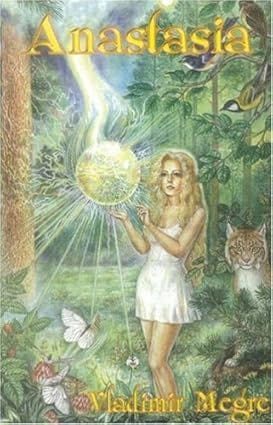
A meeting which changed a life
Having instructed his fleet's captain to maintain their course, Vladimir slipped away by himself at the exact spot where he had met the two elders the previous year. On the riverbank he found a woman waiting for him who turned out to be their granddaughter. She called herself Anastasia . This woman, through the depth of her knowledge, her sincere love and her outlook on the world, was to have a profound influence on Vladimir 's whole life.
At first he saw her simply as a young attractive woman who, though she appeared quite knowledgeable about modern urban society, seemed to be utterly naive in her aspirations to change that society from her remote location far off in the wilds of Siberia.
Later, however, Vladimir came face to face with certain psychic abilities of Anastasia's which defied explanation, even though they were undeniably real to his perception - inexplicably manifesting themselves in a tragic struggle of virtue against vice which unfolded before his very eyes. He was shaken by fonts scenes somehow presented to him from his not-too-distant past, but from a totally new point of view. Now able to look at his own and others' behaviour more objectively, Vladimir gained a new appreciation of what Anastasia was endeavouring to do, and in an effort to help, he promised to fulfil Anastasia's request and write a book about his experiences.
Action
Upon returning to his home in Novosibirsk , Vladimir made a series of unsuccessful attempts to spread this new outlook on the world among his friends. He went to Moscow and tried to organize a league of pure-minded entrepreneurs - again without success. Finding himself on the edge of an abyss, he finally remembered his promise to Anastasia to write a book, along with her assurance that the book would help many people see the world in a new light and give him the strength to go forward.
Then something incredible happened: without any specialised training, Vladimir Megre launched into writing a series of books which in a very short time became extraordinarily popular, selling in the millions, and would be translated into some twenty languages. Each passing day introduced more and more new readers all over the world to these icons remarkable writings.
The books set forth - in very clear language - profound ideas about the education of children and the importance of communicating with living Nature - ideas ranging from nutrition and health to spirituality and sexual relations. With their practical wisdom on matters rolex replica of everyday life, the books have become the basis for a number of sociological studies and scholarly papers.
We take pleasure in recommending them to the broadest possible readership.
https://www.ringingcedarsofrussia.org/Main/English/index.php
Paperback versions of the books are still available on Amazon
It has been preserved on the internet archive HERE
You can find a reading from the first book HERE
What is the Influence in Russia?
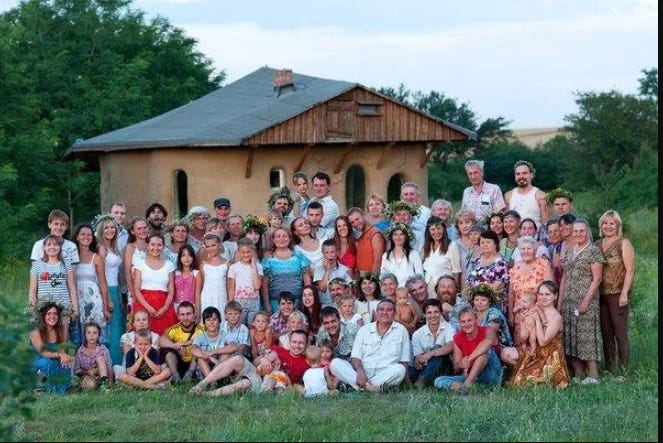
The Ringing Cedar books have had a notable impact that has inspired a back-to-the-land movement and the creation of eco villages (Kin’s Domains or ‘Rodovoye Pomestye’ in Russian) throughout Russia, based on the book’s principles.
The Ringing Cedars books inspired a notable back-to-the-land movement in Russia, leading to the creation of numerous ecovillages and kin’s domain settlements (родовые поместья). These communities emphasize self-sufficiency, organic farming, and a return to traditional ways of living in harmony with nature.
Some of these communities have been officially recognized by the Russian government.
The roots of the movement are different from movements in the West in that they have influenced nationalist and esoteric movements and blended environmentalism with spiritual and sometimes quasi-religious ideas.
Unlike typical ecovillages in the West, which often focus on communal living, kin’s domain settlements emphasize individual family homesteads, each spanning about one hectare of land, meant to sustain a family for generations.
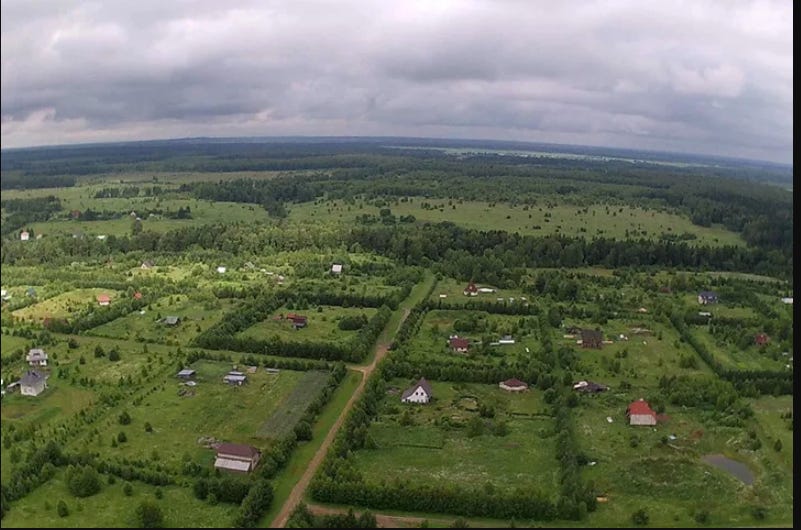
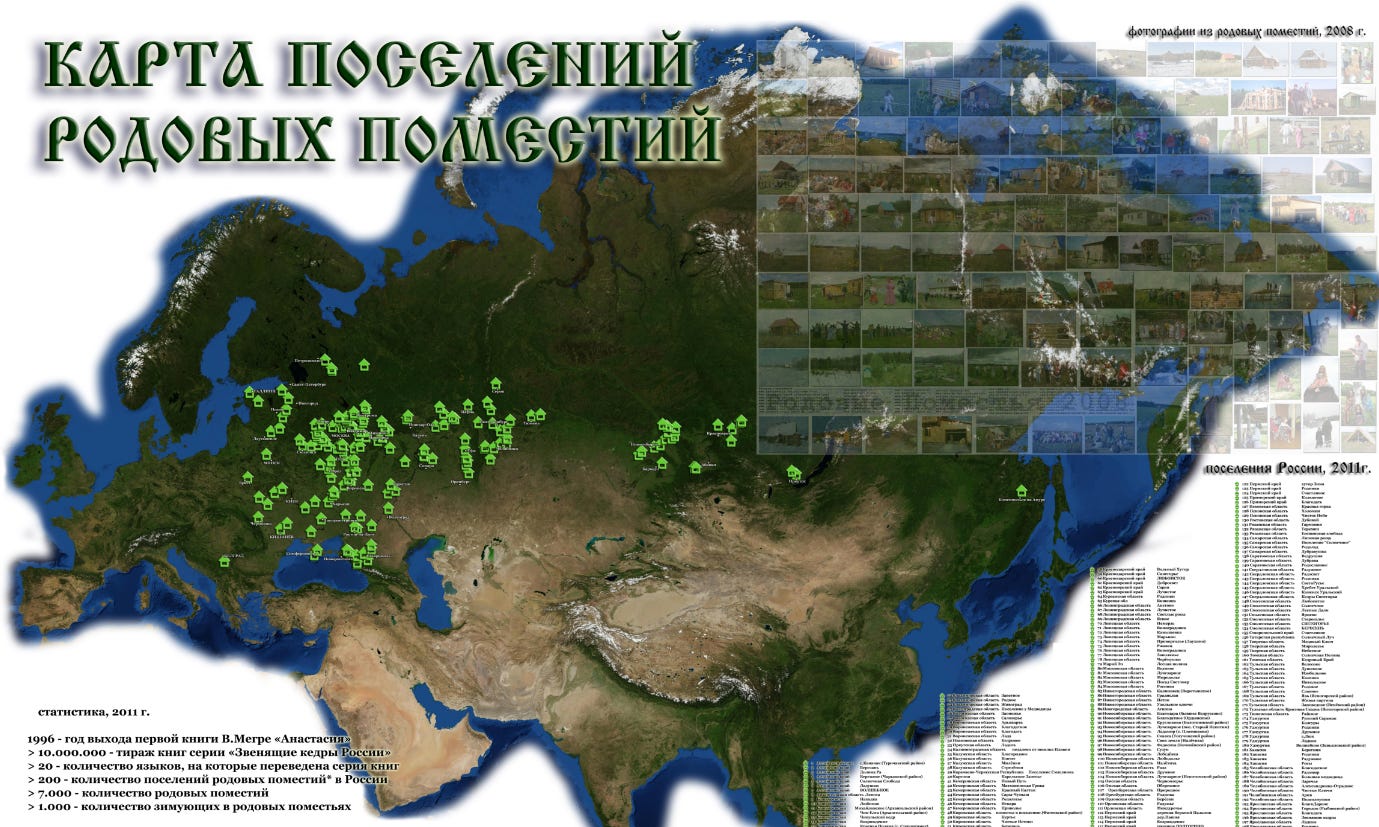
Many such settlements are scattered across Russia, Ukraine, and Belarus, with some estimates suggesting over 200 settlements have been established.
The main principles are:
Self-Sufficiency: Residents grow their own food, use natural building materials, and minimize dependence on external economies.
Spiritual Connection to Land: The idea is that cultivating and caring for a piece of land creates a deep bond between a person and the Earth.
Eco-Friendly Living: Many settlements emphasize permaculture, organic farming, and the use of renewable energy.
Revival of Traditional and Slavic Culture: Some communities incorporate pre-Christian Slavic spiritual practices, emphasizing a return to ancestral roots.
I understand that the movement has faced legal and bureaucratic challenges. Russia is a huge country and some settlements have had difficulties getting official recognition or acquiring land.
The communities’ anti-modernism combined with their spiritual or esoteric beliefs has naturally run into the scepticism of the outside community who see them as cult-like
Key Themes:
Spiritual Awakening: Anastasia is depicted as an enlightened being with extraordinary abilities, such as telepathy and healing powers. She teaches about the power of thought and conscious creation.
Kin’s Domains (Rodovoye Pomestye): A core idea is that families should establish a self-sufficient homestead (a hectare of land) to grow food and live in harmony with nature.
Critique of Modern Society: The series criticizes urbanization, consumerism, and technological dependence, advocating a return to a simpler, more natural way of life.
Russian Identity and Cultural Revival: It promotes a sense of national pride and Slavic ancestral traditions.
Here are a video that will give you an idea
Ground shots of the same eco village.
Here is a map of the Anastasia-inspired eco-villages in Russia at the moment.
Apparently, there are 337 (as of 2016), dedicated Anastasia-inspired eco-villages in Russia right now.
Dmitry Medvedev and the Russian government
There were reports that Dmitry Medvedev, while serving as President of Russia (2008–2012) and later as Prime Minister, showed interest in some of the ideas related to Ringing Cedars. In particular, during his presidency, the Russian government introduced initiatives promoting self-sufficient rural homesteads, somewhat resembling the Kin’s Domains concept from the books.
For example:
In 2016, Russia passed a Far Eastern Hectare program, offering free land in the Russian Far East for people to develop and settle—an idea that echoes Ringing Cedars principles.
Medvedev also spoke favorably about small-scale farming and ecological living, aligning with the themes of the series.
Here is a recommendation from ex-president Medvedev who we have all come to know during the current war in Ukraine.
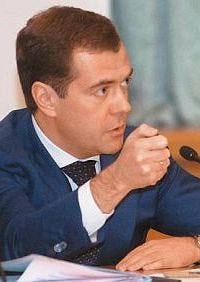
The whole idea of Kin's Domains as it has been worded here is positive in general. It is related to our idea of low-rise or one-storied Russia, which we are currently actively handling within the scope of the housing project. It was in the middle of the last year that we specifically took up this issue. It is obvious that in such a huge country as ours, with such huge territories, it does not make sense to concentrate only on small plots of land, even in megacities. It's much more useful both for health and the state to disperse on the territory of our large country.
—-Dmitriy Medvedev
***
Here are a couple of articles going back to 2014-16
A growing Trend in Russia – “Eco-Villages”
August 31, 2014
Something Curious is going on
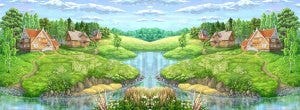
Something very curious is going on in Russia, I guess I should say more like around the world. But statistics show it’s more of a phenomenon here than anywhere else. Why? Anastasia is the answer. So who’s Anastasia, Vladimir Merge claims he met this mysterious woman who lead him deep into the Siberian Taiga. It is within these woods that she reveals to him about the philosophy of Man’s relationship to Nature and much more. These teaching to him were imparted through a series of best-selling books called The Ringing Cedars of Russia, first published in 1996. The books have for many become a reason to move Back to the Land, a movement that is increasingly becoming worldwide. Unlike the hippie movement of the 60’s these eco- communities combine deep ecology with traditional, even conservative family values based on self-reliant simple living on the land, providing physical subsistence and spiritual fulfillment.
Seeking a Simpler Life
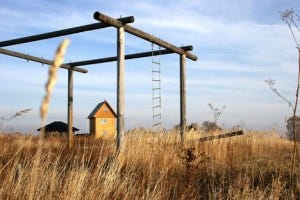
So the question arises who is interested in this type of lifestyle. It seems that thousands of disillusioned Russian professionals have made the decision to move back to the land. After losing all hope in the cities these people that seek a simpler life that just isn’t found in the big city.
I got to talk to one of them myself while on vacation this summer. Andrei along with his wife had lived in Moscow, they are not entirely off the grid, but they felt the move was well worth it. They bought a large plot of land which he plans to plan an orchard, grow a garden, and begin to enjoy some of his other hobbies that just weren’t possible in the big city.
But there are new communities of homesteaders who are completely of the grid across some of the most remotest sections of Russia.This has all happened in the past decade, including Siberia, attracting thousands of Russians in search of a simple, self-sufficient and environmentally friendly lifestyle free from state control and big city corruption. This trend has grown not just in Russia but other countries as well.
Beginnings of other Eco-Villages
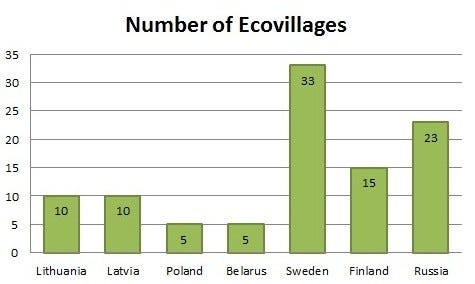
As can be seen above chart the largest communities are found in Sweden with Russia trailing behind them. But there is the beginnings of other Eco-villages starting up in Lithuania, Latvia, Poland, Belarus and Finland as well. Along with this trend there has been a rise in religious communes that have also emerged in the far east of Russia. In the Land of Plenty commune, stresses that they are not a threat and welcome guests who want to visit and sample the commune’s honey, pumpkin pies, and goat milk.
Embraced by the Government
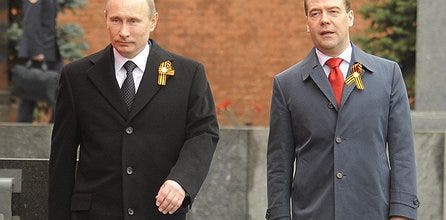
What comes as even more interesting is the fact that Putin and Medvedev are both very much in support of these Eco-villages. In fact in Latvia there’s a village named after Putin. Even established environmental groups such as Greenpeace Russia welcome the Eco-commune movement. The movement in Russia has become better know as “Kin Domains”, a place where the tradition of families having a dachas can be enjoyed, where they relax in the summer and grow gardens.They now can form as Eco-Villages, it seems that the outlook of the nation is changing and the government is embracing it. Those within the movement are very supportive of Putin.
So how about the common folks
Anatoly Molchanov and his wife Tatiana who lives in one of the villages stated:
“The main concept is to become better unified and affiliated with nature. In a city man lives in an artificial world, he becomes a robot. But if man lives in a natural environment he can become a spiritual being. It is only in nature that man becomes man,” Anatoly Molchanov believes.
It is all about returning back to basics, living a simple life and looking after the environment in the most natural way. What could be more Eco-friendly than a bio toilet, which uses sawdust on the ground and does not waste water, using the outdoor loo on a cold winter night will not appeal to everyone.
Many would say it is a humble life and not for them. But people in the Eco-villages do have modern conveniences, car, mobile phones and the internet. So, living in a Kin Domain does not mean escaping civilization. There’s a real sense of unity that can be felt in the communities that just doesn’t happen in the big city.
How A Mystical Novel Spurred the Ecovillage Movement in Russia
September 15, 2016
Over the years, many intentional communities have drawn on works of fiction for inspiration. They can serve as cultural touchstones, helping connect the communities in a particular region with a shared philosophy or way of life.
Here in the Pacific Northwest, books like Ecotopia and The Fifth Sacred Thing sit on many communal bookshelves. The Twin Oaks community in Virginia was modeled after Walden Too, while a planned community in South America is inspired by the feminist sci-fi novel Herland.
But one of the most influential utopian novels of the past few decades is one you’ve likely never heard of. Called The Ringing Cedars of Russia, it has spurred a Back-to-the-Land movement in Russia and beyond.
****
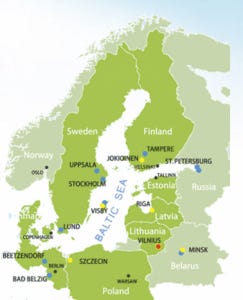
In the mid-1990s, there were few eco-villages in Russia. Now, there are hundreds of them throughout the Baltic region, including over 200 in Russia alone. Many have won the support of both the right-wing government and environmental organizations like Greenpeace Russia. What changed?
In 1996, an entrepreneur named Vladimir Megre self-published a book called Anastasia, about an encounter he had with a woman who lived in the wilderness in Siberia. Although the veracity of her identity is a topic of debate, she was allegedly born in 1969 and lives on the River Ob – although doesn’t currently receive guests.
While visiting with Anastasia, Megre spent three days learning about her way of life, including her philosophy on the natural world and her spirituality. She introduced Megre to the “ringing cedars,” 500-year-old trees that she claimed have mystical, healing properties.
Megre returned home determined to write her story, and he self-published the first Ringing Cedars book in 1996. It included Anastasia’s proscription on how future generations should live: on sustainable homesteads a hectare or more in size, complete with gardens, beehives, a sauna, a water source, and more, with the primary purpose of raising healthy children. These homes were referred to as a Family Homestead or Kin’s Dominion.
The concept took off, with thousands of fans forming readers’ groups, determined to create eco-villages of their own. Prime Minister Dmitry Medvedez praised the idea, and the government has begun offering families free land, a hectare in size, for those willing to move to sparsely developed regions of Eastern Russia.
Not all of Russia’s eco-villages are connected to the Ringing Cedars movement; some, like the Land of Plenty commune, are home to over 50 middle-class families. Many of them were working professionals who wanted to leave behind the corruption and consumerism they experienced in big cities.
Other groups are carrying the Ringing Cedars movement overseas, with projects like Anastasia USA hoping to connect American fans of the series to create their own homesteads. The site even has a “Find My Soulmate” page!
At the same time, the books have received their share of criticism. Some see Vladimir Megre as an opportunist, cashing in on the “based on a true” story trope to sell his novels. Others point out that the books promote conservative family values – with a mother and father leading each homestead – rather than true egalitarianism and gender equity.
One Amazon reviewer says, “Those who ignore the anthropocentrism and misogyny inherent in this series will not be doing our Mother Earth any favors.”
Jean Nolan
On researching further I found that in the US, Jean Nolan is quite involved.
Here he is in a video introduction to the book series
Here, he reads from one of the books on how the world was enslaved.
thank you
Yes I read the Anastasia series about fifteen years ago, loved them