Food rationing: the only difference between Australia and NZ is that Aussies are being told and Kiwis are being kept in the dark

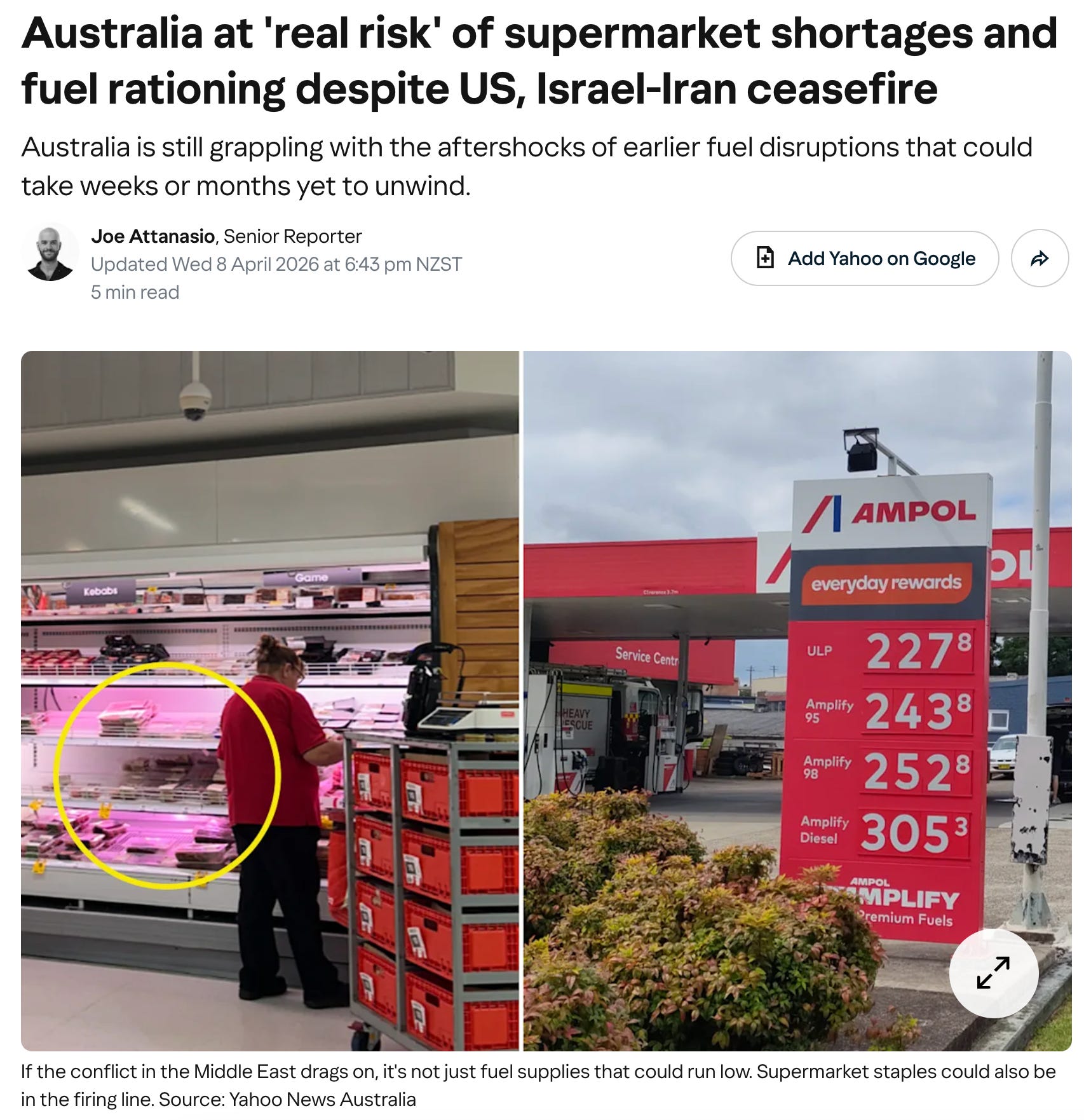
Australia could still be heading for petrol rationing if the conflict in the Middle East drags on, with experts warning of “significant and widespread” disruptions that might even see supermarket shelves stripped of products.
On Wednesday, just hours before a deadline for Iran to comply with US demands, President Donald Trump announced that Washington and Tehran had agreed to a two‑week ceasefire, backing away from earlier threats that “a whole civilisation will die tonight” if a deal wasn’t reached.
As part of the agreement, Iran agreed to reopen the critical Strait of Hormuz, the chokepoint through which around a fifth of the world’s oil flows.
But experts have warned that Australia’s fuel system is still vulnerable, and while global oil flows could soon resume, the pressure on local pumps and supply chains remains high.
The country is dealing with the knock-on effects of prior disruptions, delays in shipments, thin stockpiles, and uneven distribution that have created a backlog which could take weeks to clear.
Yahoo News Australia spoke to Ben Fahimnia, a logistics and supply chain specialist, about what would need to occur for formal fuel rationing to be triggered.
When would Australia be forced to ration fuel?
Fahimnia explained that formal fuel rationing isn’t just flipping a switch.
Under Australian law, it’s triggered through emergency powers when fuel security is threatened, and essential demand can’t be met.
He said it’s “more about a combination of conditions”, including “significant import disruption, depletion of commercial stockpiles, and failure of market-based allocation”.
When that happens, the government can step in and coordinate who gets fuel first, with healthcare, freight, and food distribution taking priority.

Rationing works best if introduced early, rather than after shortages have already spread.
At the moment, Fahimnia said Australia is in the early stages of stress.
The country runs on thin buffers and relies heavily on imports.
“The real risk lies in the next disrupted shipment rather than current stock levels,” he said.
Indicators like delayed shipments, more frequent dry pumps, or sudden spikes in demand can quickly push the system from stable to stressed, sometimes within days.
The government has assured the public that fuel supply is secure into May, but Fahimnia warned that the assumption is fragile.
It depends on uninterrupted imports and steady demand, both of which are vulnerable in the current context.
Even a single delayed shipment or a wave of panic buying can erode the buffer almost overnight.
“The issue is not today’s supply position, but how quickly conditions can deteriorate,” he said.
Waiting for visible shortages before acting could be a policy failure.
What other sectors could be impacted?
Should it occur, the effects of fuel rationing would ripple across the economy.
“Logistics and freight would be among the most affected, with potential disruptions to food distribution and the essential goods supply chain,” Fahimnia said.
Farmers might struggle to move products in and out of farms on time.
“Agriculture would face challenges in transporting inputs and outputs, particularly in time-sensitive operations,” he said.
“For households, commuting patterns would be disrupted, which increases pressure on public transport and potentially reduces labour mobility.”
Where does most of the problem stem from?
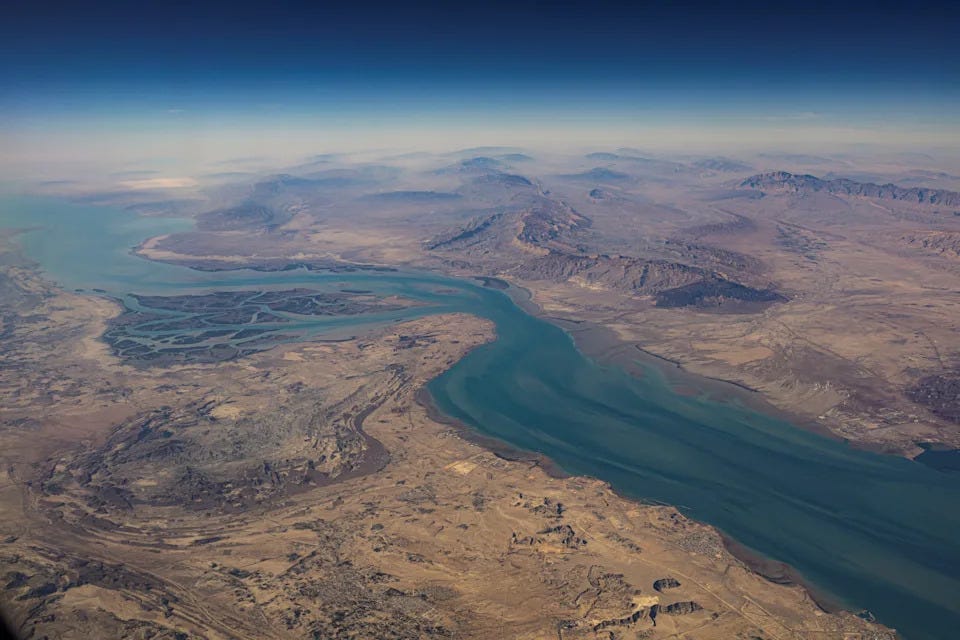
Much of the risk comes from geopolitical tensions in the Strait of Hormuz, but domestic factors can make things worse.
Australia’s relatively low stockpile levels and lack of real-time visibility mean that even a moderate disruption can escalate quickly.
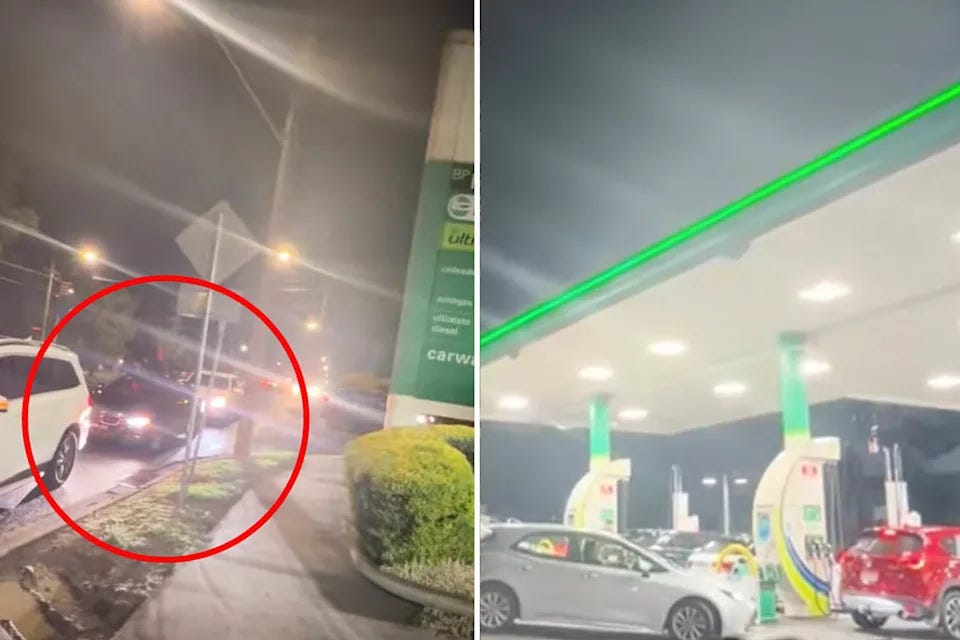
Panic buying is particularly damaging, turning what might be a manageable supply hiccup into widespread shortages almost overnight.
“In that sense, geopolitical disruption creates the shock, but domestic vulnerabilities determine how severely it is felt,” Fahimnia said.
So what can Australians do now?
Fahimnia said the priority isn’t individual stockpiling but building a system that can manage supply in real time.
He called for a national fuel “control tower”, a central hub tracking fuel supply, usage, and priorities across sectors.
This would allow authorities to coordinate allocation, ensuring critical sectors get what they need and preventing chaotic, uneven responses.
“If we wait until shortages escalate before building this capability, we will be reacting to the crisis rather than managing it,” he said.
“Visibility is power, and without it, rationing risks becoming chaotic, uneven, and far less effective.”
Early and coordinated management is essential to avoid long-term disruption.
While the idea of pumps and shelves running dry might sound dramatic, Fahimnia stressed that acting early and strategically can prevent the worst-case scenario, and that planning now is far better than reacting when it’s too late.
Wonder why? I have or am doing a preparedness routine now, almost complete.