Document Fraud by Indian Migrants Threatens New Zealand

This, to be fair, has not been centre of my attention.
Fake Doctors, Real Danger: How Document Fraud by Indian Migrants Threatens New Zealand
Apr 29, 2026
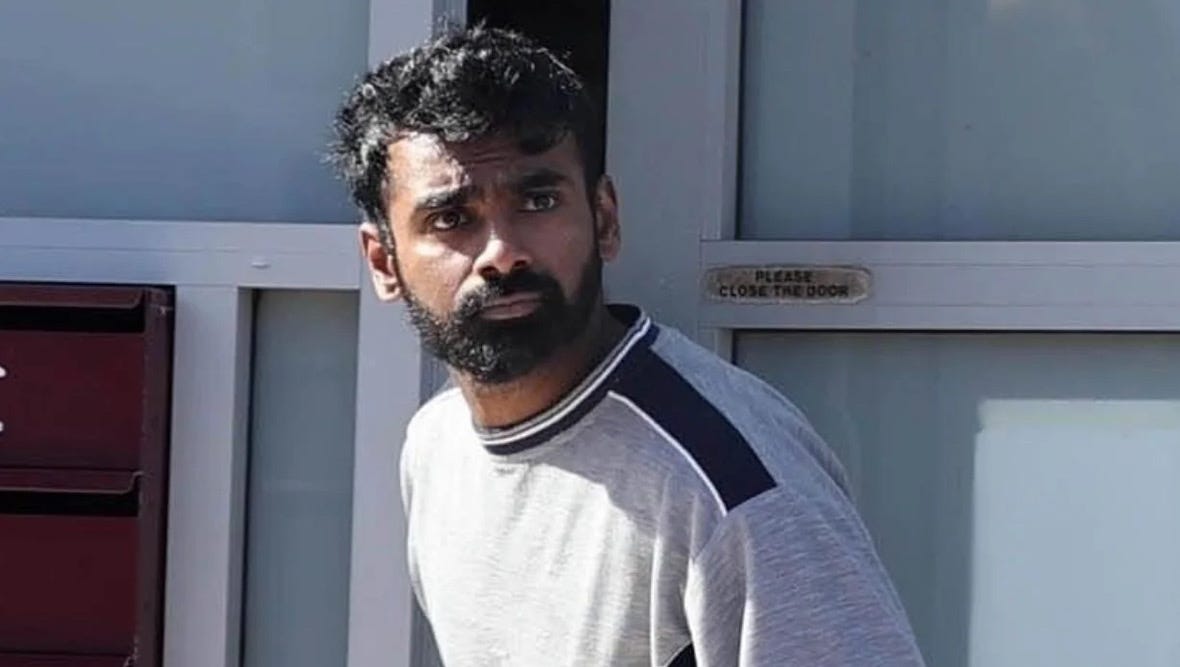
In August 2022, Auckland’s Middlemore Hospital — one of New Zealand’s busiest — discovered it had employed an impostor doctor for six months. Yuvaraj Krishnan, an Indian national, had treated dozens of patients in the respiratory ward during the pandemic using entirely fake qualifications. He forged an annual practising certificate from the Medical Council of New Zealand (MCNZ), a fabricated CV claiming a medical degree from Poland’s Jagiellonian University and a Master of Science from Sydney, plus non-existent references from Auckland doctors and a fake email from an MCNZ staff member.
What makes Krishnan’s case particularly alarming is not just the deception, but how he was caught — and what it reveals about systemic vulnerabilities. A colleague recognised him from a decade earlier, when Krishnan had posed as a legitimate medical student at the University of Auckland. Between 2011 and 2012, he attended lectures, classes, and even laboratories (including cadaver dissections) without ever being enrolled. He forged a student ID card and maintained the charade for two years until the university trespassed him in 2012.
No routine background check, no verification of his claimed foreign degree, and no cross-referencing with immigration or professional registration systems flagged him until a personal tip-off. He pleaded guilty to multiple forgery charges, was sentenced to three years and seven months in prison, and remains behind bars after parole denials.
This was no isolated “one bad apple” incident. Document fraud involving fake qualifications — especially medical degrees, transcripts, and professional certificates — has become a sophisticated, organised industry in India, with well-documented networks supplying migrants seeking jobs and visas abroad. The pattern is repeating across the UK, Canada, Australia, and the United States, raising serious questions about New Zealand’s preparedness as it opens the doors wider under the newly signed India-New Zealand Free Trade Agreement (FTA).
A Global Industry of Fake Credentials
India’s own authorities have repeatedly exposed massive rackets selling forged academic and professional documents. In one of the largest recent cases, Kerala Police in late 2025 dismantled a network that produced and distributed over 100,000 counterfeit university certificates linked to 22 institutions. Investigators estimate the operation issued more than one million fake degrees in fields including medicine, nursing, and engineering. These were sold for between ₹1-3 lakh (roughly NZ$1,800–5,400) each and routed through agents across multiple states for use in domestic jobs and overseas migration, including H-1B visas to the US. Eleven people were arrested, and authorities seized printing equipment, fake seals, and mark sheets. Similar networks have been linked to jobs in Europe, the UK, the US, and the UAE.
Another high-profile scandal involved Manav Bharti University (MBU) in Himachal Pradesh. Between 2009 and around 2020, the institution sold approximately 36,000 fake degrees out of 41,000 issued — meaning only about 5,000 were genuine. Degrees were sold for as little as US$1,362 each to buyers across 17 Indian states and abroad. Graduates with these bogus qualifications have been identified working or studying in Singapore, Malaysia, the US, and Canada. Indian authorities pursued extradition of the university’s promoters, who were later declared fugitive economic offenders.
Smaller but equally brazen operations continue. In Uttar Pradesh, rackets have been busted selling backdated medical degrees and even renting out real doctors’ credentials to register pathology labs. Fake degrees have been openly advertised and sold online or through migration consultancies, with “packages” including transcripts, marksheets, and supporting documents.
These are not amateur forgeries. Networks operate professional printing presses, use couriers, and employ agents who specialise in tailoring documents to target countries’ requirements. Some migration consultancies in Punjab and other hubs have been caught providing fake university admission letters specifically for student visas — the exact entry point Krishnan exploited years earlier in New Zealand. Canadian authorities, for example, have deported Indian students after discovering forged college admission documents supplied by Indian agencies, with some students claiming they were duped but others clearly complicit.
The problem extends to professional registration. Reuters investigations years ago highlighted widespread fraud in India’s medical education system, where unqualified practitioners have operated even in major hospitals. Indian-trained doctors have faced disproportionately high rates of fitness-to-practise issues in the UK and Australia.
Why This Is a Direct Threat to New Zealand
New Zealand’s healthcare system already relies heavily on internationally qualified doctors. A single undetected impostor like Krishnan treated real patients for months. Had he not been personally recognised, he could have continued indefinitely. The fact that sophisticated forgeries — complete with fake official emails and registrations — bypassed MCNZ and hospital vetting processes shows that current verification systems are not robust enough against organised fraud.
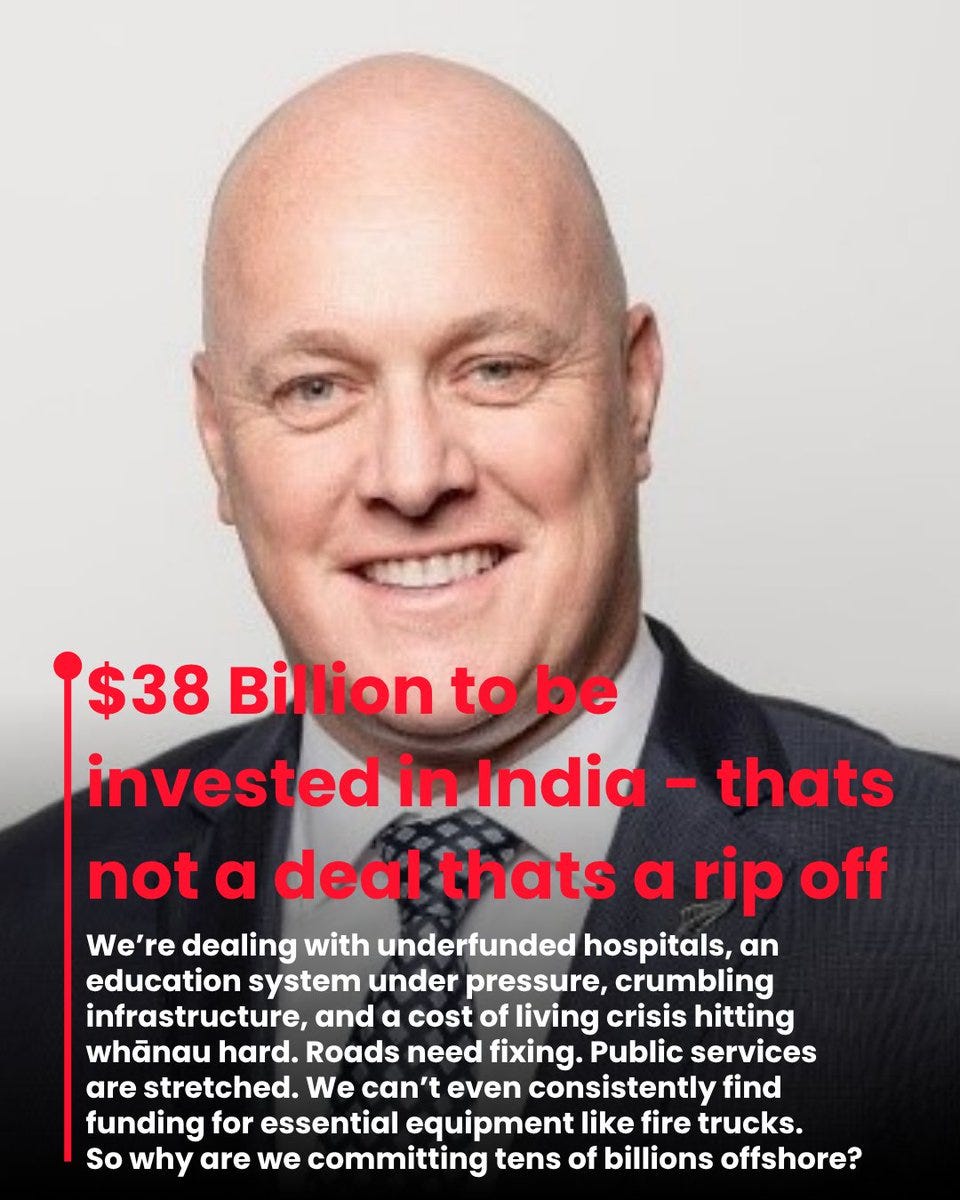
This risk is about to escalate dramatically. On 28 April 2026, India and New Zealand signed a landmark FTA that includes unprecedented mobility provisions. For the first time, New Zealand has agreed to a dedicated student mobility annex with another country. The deal explicitly removes numerical caps on Indian students, grants them the right to work up to 20 hours per week while studying, and provides extended post-study work visas (up to three years for STEM bachelor’s/master’s graduates and four years for doctoral students). It also creates pathways for thousands of skilled professionals in healthcare, IT, engineering, and other sectors, plus a working holiday scheme for 1,000 young Indians annually.
Krishnan’s trajectory — fake student status first, then progression to a fake practising doctor — is exactly the pathway the FTA now supercharges. With uncapped student inflows, the volume of applications will surge. Migration agents and document fraud networks in India have already proven adept at exploiting student visa routes. If even a small percentage slip through with forged credentials, New Zealand could end up with hundreds more unqualified individuals in classrooms, laboratories, and eventually the workforce — particularly in high-stakes areas like medicine.
Immigration New Zealand and professional bodies already struggle with verification. Documents from India are notoriously easy to fabricate, and many issuing institutions are themselves compromised. Cross-border checks are limited, and reliance on self-declaration or basic database lookups fails against professional forgers who replicate seals, watermarks, and even digital verification portals.
The Human and Systemic Cost
Patients deserve qualified care. Employers and taxpayers deserve confidence that skilled migrant workers are genuine. The alternative is eroded trust, compromised safety standards, and potential scandals that damage New Zealand’s international reputation.
Other countries have responded with stricter scrutiny: enhanced credential verification services, mandatory in-person interviews, and AI-assisted document analysis. New Zealand must do the same — urgently — before the FTA’s benefits are undermined by its foreseeable risks.
The Krishnan case was a warning delivered by chance recognition. With the FTA now in force and large-scale Indian migration accelerating, relying on luck is no longer an option. Sophisticated fraud rings in India have turned fake qualifications into a lucrative export. New Zealand’s systems must evolve to match that sophistication, or the next impostor may never be caught.
This happened on a few occasions in Australia too, in the medical system.
Indians were kicked out of Fiji for a reason