Do you think people are learning?

NZ’s fifth Covid-19 wave prompts six-fold bump in booster shots
New Zealand’s fifth Covid-19 wave has triggered a bump in people getting booster shots, as infections hover at elevated rates weeks ahead of Christmas.
Deputy-director of Public Health Dr Harriette Carr said there’d been a “significant” increase in adult vaccinations since early November, with nearly 31,000 vaccinations given in the last reported week – six times the average number being administered over previous months.
The latest wastewater surveillance indicated infection levels in our communities were still running at their highest since January, with data from last week showing a national average of just over six million copies of the virus detected per person, per day.
https://t.co/9laKzeabLC Wastewater COVID-19 surveillance_Aotearoa New Zealand. Nationally, results are still elevated - see map that compares to 12 weeks ago where most sites show that levels are up. Technical sequencing issue (resolved) causing a delay so will update next week. pic.twitter.com/h5DNI8moD9
— Joanne Hewitt (@joannehewittnz) November 30, 2023
That was six times the volume recorded at the end of winter and even higher than what was observed at the peak of the last wave in April.
The regional picture was sometimes varied, with Auckland’s wastewater data showing a slight dip since mid-November, but rates creeping up in regions including Canterbury and Northland.
“But most of them are showing elevated levels, and that’s what the national rate is reflecting,” said Dr Joanne Hewitt, head of ESR’s Environmental Virology Laboratory.
The weeks-long stretch of elevated rates contrasted with last year’s waves, she said, which came with clear and sharp peaks.
The most recent wastewater data also suggested Omicron off-shoot EG.5, or “Eris”, and its close relatives were causing the most infection in New Zealand – although not to the extent that single new variants drove waves last year.
New #COVID19 update for Aotearoa New Zealand
👉EG.5 is most common
👉XBC persists despite EG.5 & HK.3
👉EG.5.1.8 & FL.20 growing but not alarming
👉Low frequency of BA.2.86
👉#Wastewater: EG.5 dominant, HK.3 rising, XBC stable, & BA.2.86 detected
See more: https://t.co/8ucqpICcLP pic.twitter.com/i00gXIQqbe— Rhys White 🧬 (@RhysTWhite) November 2, 2023
Covid-19 waves were still being driven by exposure to new variants and waning population immunity, Carr said, and weren’t yet following seasonal patterns seen with other respiratory infections.
Covid-19 modeller Professor Michael Plank said there were indications from the last two weeks that case numbers in many regions could be starting to fall – but Christmas party season could bring its own bump.
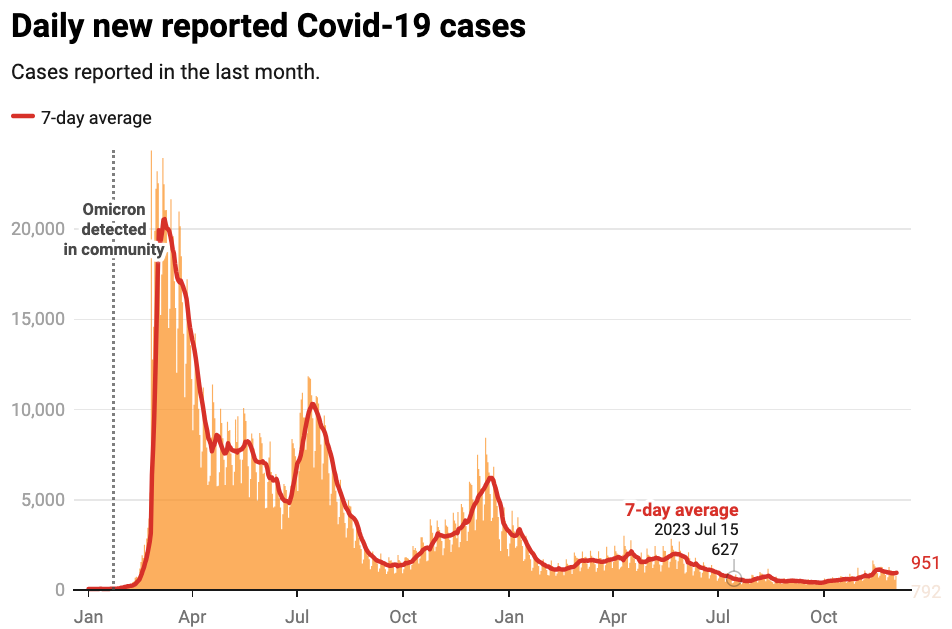
“It’s possible that the pre-Christmas period, when it’s quite busy with lots of social events happening, could push things up a little bit temporarily – but once school holidays kick in, I’d expect those numbers to start to come down.”
Otago University epidemiologist Professor Michael Baker encouraged people to take measures to avoid infection at festive social events.
“At this time of year, there’ll always be more socialising and people want to get together – but that’s why we need to be more conscious of taking basic precautions,” he said.
“Anecdotally, there seems to be a lot of the virus out there: I know of people who’ve gone off to 21st birthday parties and half of them have come away with Covid.”
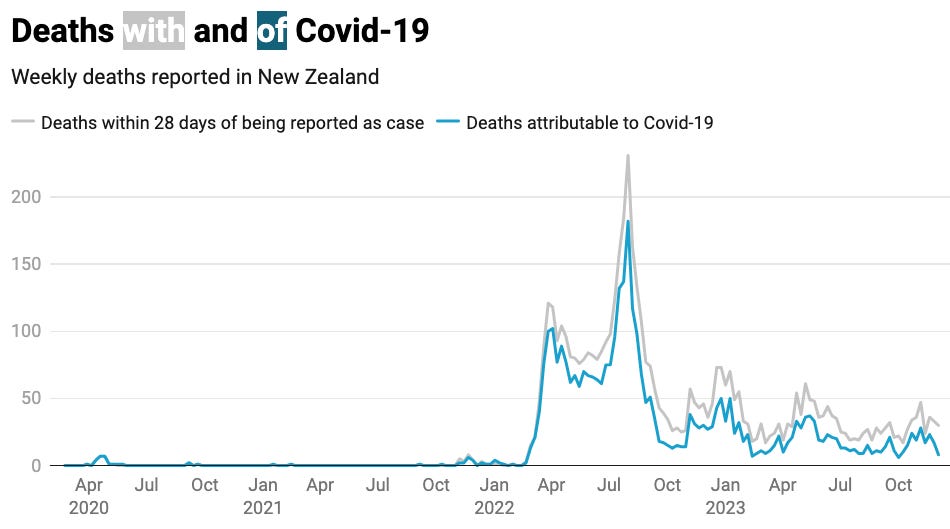
Baker pointed to the toll the virus continued to take, with reinfection posing the risk of Long Covid, and hospitalisations running at their highest numbers – 349 as at Sunday - since January.
Carr said those currently at most risk were older people, particularly those aged over 70 years, who were “highly represented” in hospitalisations and deaths.
“Our advice is that if you are unwell, stay away from people at higher risk of getting very sick, such as babies, older people, immunocompromised and disabled people.”
Boosters remained freely available to everyone aged over 30, along with those aged 16 and over who were pregnant, and those aged 12 to 29 who were at higher risk of severe illness.
“Covid-19 is still in our communities and is a significant risk – so please protect yourself, your whānau, and your community by getting immunised.”