China's brain chip project

China speeds up human trials for brain chip project
The Chinese Institute for Brain Research in collaboration with NeuCyber NeuroTech, has started testing a wireless brain chip named Beinao No.1, with a queue of up to 13 individuals scheduled for 2025 however safety concerns on neural implants in human brains remains.
By: Lionel Eddy
7th April 2025
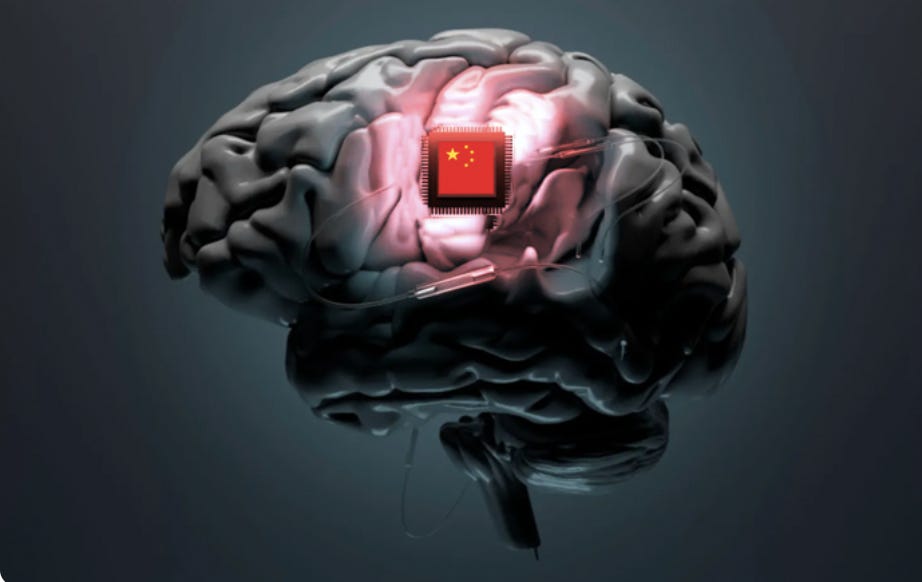
The Beijing-based Chinese Institute for Brain Research or CIBR and NeuCyber NeuroTech aim to implant brain chip interfaces in 13 individuals by year’s end. They have already performed a chip insertion on a participant known as Beinao No. 1. [1] To date, 3 participants have received implants, aligning with Elon Musk’s [2] Neuralink who have also implanted devices in 3 individuals in the US. Luo Minmin who is the director of CIBR and NeuCyber’s chief scientist told reporters at the Zhongguancun Forum in Beijing, “Next year, after getting regulatory approval, we will do formal clinical trials that will include around 50 patients, since news of Beinao No. 1’s successful human trials came out, we have received countless pleas for help.”
In 2024, The NeuCyber Array BMI System [3] which is backed by the Chinese government has announced the successful development of a brain chip, which has been implanted in a monkey that can now control a robotic arm remotely using the device. The company unveiled its device, the NeuCyber Array BMI System at a technology convention in Beijing. Luo Minmin who [4] is the director of the Chinese Institute for Brain Research, says The BMI acts as the information highway for the brain, enabling communication with external devices and offering advanced technologies in human-machine interaction and hybrid intelligence. “In short, the technology captures the subtle changes of electrical signals from neurons and decodes the brain's intentions, to realize 'thoughts' control 'actions', both its number of effective channels and long-term stability are up to the international state of the art. Different from stiff electrodes, the flexible microelectrode array can still effectively record brain signals after one year of implantation in the brain of macaque monkeys. BMI system focuses on safety, stability and effectiveness. It's a systematic project,” said Minmin.
In a promotional image from the convention [5] captured by Xinhua, the company showcased video footage at their booth demonstrating the implant's functionality. The footage depicts a monkey secured inside a plexiglass enclosure, with delicate wires connected to its brain. According to Xinhua, the video shows the monkey sitting in front of a robotic arm inside a laboratory, appearing to use it to grasp a strawberry. Neuralink [6] a neurotechnology company founded by Elon Musk implanted a chip in a human test subject named Noland Arbaugh, in a recorded demonstration, Arbaugh [7] was able to play Mario Kart using the implant. However, the journey towards Neuralink's brain chip has been fraught with tragedy. Former employees have [8] reported disturbing accounts of test monkeys that endured suffering and death as a result of Neuralink implants. This would lead to Neuralink being under federal investigation for animal cruelty and violating the Animal Welfare Act. Ryan Merkley who is the director of research advocacy for Physicians Committee for Responsible Medicine said, “There’s this incredible pressure by these Silicon Valley dudes who want their devices on the market, they want to push things forward, but they don’t understand that these things take time that leads to as we’ve seen botched experiments and animals suffering.” If Neuralink has faced issues with test animals dying and has circumvented government officials to prepare its implant for human use, we can only speculate on what actions this Chinese company might have taken in its pursuit of a brain chip device.
Back in 2020, a Turkish IT specialist Rahmi Aktepe told the [9] Anadolu Agency that computer brain chips can be hacked, he also believes neural implants in the human brain can lead to the person being damaged mentally and physically. “If the chip in question is widely used, it is possible to control people against their will and even turn them into a killing machine by seizing the chip, however, no one can claim that this will definitely not to be used to control people in the future, I think the main purpose is to load brain signals received from people to smart robots and or load those signals to people, turning them into robots. If the chips are used within ethical frameworks, people can make faster and correct decisions since it is supported by artificial intelligence,” said Aktepe.
https://english.news.cn/20240426/f410021b0a14424abdc925358d94fceb/c.html
https://www.reuters.com/science/chinas-version-neuralink-unveiled-tech-forum-2024-04-25/
https://www.pcmag.com/news/neuralink-patient-also-uses-brain-chip-to-play-mario-kart
https://www.vox.com/future-perfect/2022/12/11/23500157/neuralink-animal-testing-elon-musk-usda-probe
Joe Rogan Guest Offers a Bone-Chilling Look into the Dark Side of Gene Editing This is already happening in China.

Biotech entrepreneur Ben Lamm painted a bone-chilling picture of where humanity could be headed on episode #2301 of The Joe Rogan Experience. Gene editing was at the heart of the conversation—and according to Lamm, China isn’t just experimenting with it. They’ve already created genetically modified children.
He pointed to a now-infamous case in 2018, when Chinese scientist He Jiankui announced that he had cloned human embryos and edited their genes using CRISPR to make them resistant to HIV. The news shocked the world and led to widespread condemnation. He was later sentenced to prison for violating scientific ethics and conducting unapproved procedures.

But Lamm warned it doesn’t stop there. He said there’s a growing debate over whether those same embryos were also edited for enhanced intelligence. The science is still inconclusive, but the intent, he claims, is very real.

Lamm pointed to BGI (Beijing Genomics Institute) as a key player in this effort. He claimed that during the COVID-19 pandemic, BGI offered free testing to countries around the world—not just out of goodwill, but to harvest DNA at scale. “They’re like, ‘We’ll do all the COVID testing for you free,’” he said. “Just send us your data.”

BGI has drawn global scrutiny. A 2021 Reuters investigation revealed that the company’s prenatal tests, taken by millions of women globally, were being used to collect genetic data for the Chinese military without proper consent or oversight.

Lamm alleges that BGI has publicly stated its mission is to sequence as much of the global population as possible in search of genes tied to intelligence—and act on the findings.

“They are openly saying we are sequencing as much as we can of the world population looking for genes for intelligence,” he told Rogan. “That’s not a hidden thing.”
If one country starts genetically modifying its population, others won’t stand by and watch. It’ll set off a global arms race—not with missiles or drones, but with DNA to see who can engineer the smartest, most advanced generation of humans on the planet. And once that race begins, there’s no going back.
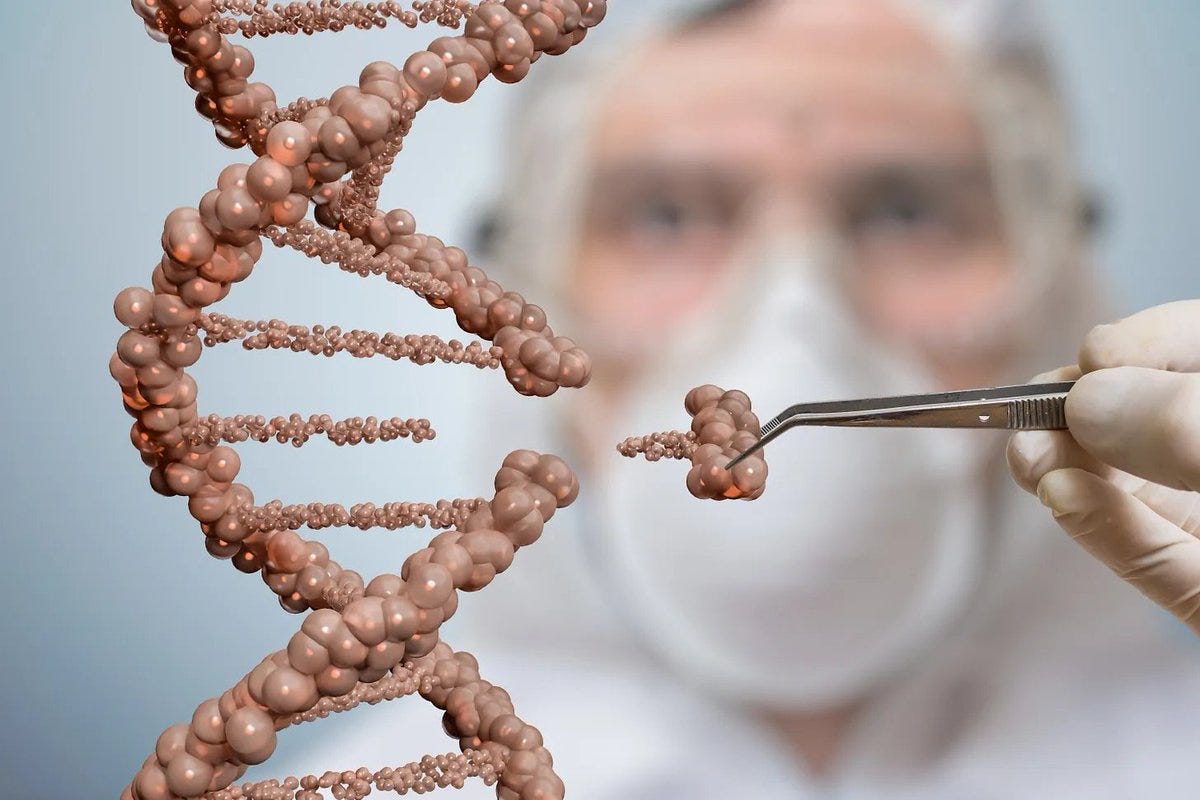
Watch the full conversation below:
I am way more concerned about Palantir, DARPA and the Israeli Government's surveillance apparatus than China's.
PS. If you took the Covid-19 modified mRNA gene therapy platform injections which change gene expression and connect you to the Internet of Bio-Nano Things then, you already have a Brain-Computer Interface.
https://unlimitedhangout.com/2025/01/investigative-reports/the-cdc-palantir-and-the-ai-healthcare-revolution/
https://rumble.com/v6ishsj-394359571.html